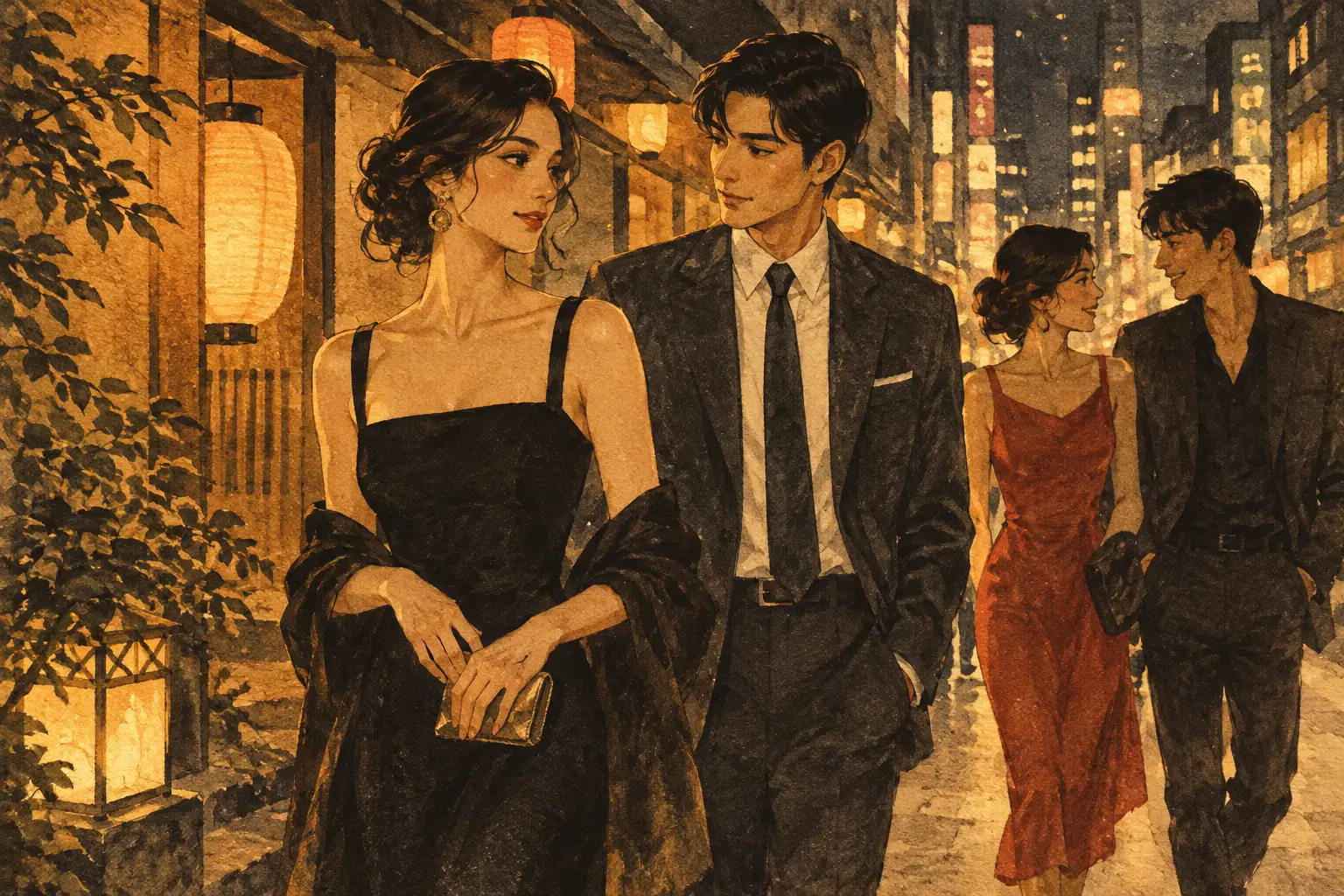
A night out in Tokyo can mean a tiny Shinjuku bar, a cocktail lounge or a busy dance floor. You do not need a suitcase full of formalwear. Start with clean, comfortable clothes, then adjust to the places you actually want to visit.
The cover captures one possible mood: dressing up, feeling confident and perhaps making a good impression on someone. Enjoy that look if it suits you. A suit, evening dress or heels are not compulsory equipment for a good Tokyo night.
I’m Renaud, founder of Japan BTO and a Tokyo resident since 2007. When I help plan an evening, I look at the venues, the group and the music first. Clothing should help you enjoy that plan, not make you feel as though you are playing a part.
The easy starting point: smart casual
A shirt, polo, neat T-shirt with a jacket, dress or favourite top can all work. Add clean jeans or trousers and comfortable shoes. You can be colourful, understated or a little dressed up: the useful question is whether your outfit suits the venue and lets you move comfortably.
- For bars and izakaya: relaxed, tidy clothes are a practical starting point.
- For cocktails or a special dinner: add a sharper layer or dressier shoes if you feel like it.
- For clubs: check the actual entry policy, especially footwear, visible tattoos and identification.
- For a long evening: choose shoes you have already worn comfortably. Tokyo nights involve stairs, stations and walking as well as dancing.
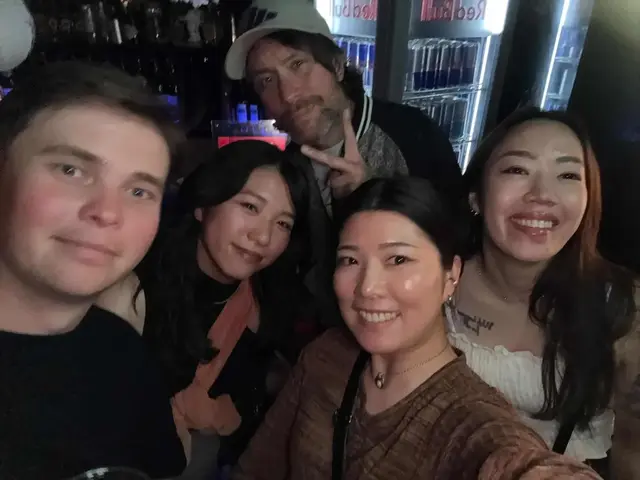
Tokyo club dress codes: nine official policies compared
Here is what the clubs publish on their own websites. “May refuse” means the venue retains discretion; an item not mentioned is not necessarily allowed. Check the policy for your chosen event before going.
Official pages checked on 31 October 2026.
| Club & official source | Clothing & footwear | Tattoos & details |
|---|---|---|
| WARP SHINJUKU | No special dress code, but overly casual attire, including sandals, may be refused for safety. | Visible tattoos, including stickers and body paint, may lead to refusal. The VIP page repeats these rules. |
| T2 SHINJUKU | Tracksuits, tank tops, shorts and sandals may lead to refusal. Beach sandals are also flagged as an injury risk. | Excessively exposed tattoos may lead to refusal; the wording is not a blanket ban on every tattoo. |
| ATOM SHIBUYA (ATOM TOKYO) | Track or sweat-fabric trousers, flip-flops and rubber slippers are examples of attire that may be refused. | Exposed tattoos are prohibited. Men wearing only a tank top on top are refused. These are the Shibuya venue’s rules. |
| 1 OAK TOKYO | No detailed dress code found on the official website checked. | Confirm your outfit with the club for your chosen night. This does not mean there is no dress code. |
| CÉ LA VI TOKYO — Club Lounge | The general FAQ specifies smart casual. The Japanese Club Lounge page is stricter: shorts, tank tops, tracksuits and sandals are listed as grounds for refused entry. | The Club Lounge page also lists tattoos as grounds for refusal, without a visibility qualifier. These are club-specific rules, not a summary for the restaurant. |
| TK NIGHTCLUB | The FAQ refuses matching tracksuit or sweat sets and sandals, including flip-flops and Crocs. | The VIP page also lists tank tops and workwear among refused attire. A VIP reservation is not a published exemption. |
| ZEROTOKYO | No particular dress code. Inappropriate attire may be refused; beach sandals in summer may be refused for safety. | Exposed tattoos, including stickers and body paint, may lead to refused entry. |
| WOMB | No special dress code. The English FAQ adds possible refusal for inappropriate attire or beach sandals in summer. | The Japanese FAQ simply welcomes individual fashion. No tattoo-specific rule was found in the FAQ checked. |
| SEL OCTAGON TOKYO | Tracksuits, sweatwear, shorts, tank tops and sandals may lead to refusal at the club’s discretion. | Visible tattoos are also possible grounds for refusal. The published rule does not distinguish between men and women. |
WARP SHINJUKU
No special dress code, but overly casual attire, including sandals, may be refused for safety.
Visible tattoos, including stickers and body paint, may lead to refusal. The VIP page repeats these rules.
T2 SHINJUKU
Tracksuits, tank tops, shorts and sandals may lead to refusal. Beach sandals are also flagged as an injury risk.
Excessively exposed tattoos may lead to refusal; the wording is not a blanket ban on every tattoo.
ATOM SHIBUYA (ATOM TOKYO)
Track or sweat-fabric trousers, flip-flops and rubber slippers are examples of attire that may be refused.
Exposed tattoos are prohibited. Men wearing only a tank top on top are refused. These are the Shibuya venue’s rules.
1 OAK TOKYO
No detailed dress code found on the official website checked.
Confirm your outfit with the club for your chosen night. This does not mean there is no dress code.
CÉ LA VI TOKYO — Club Lounge
The general FAQ specifies smart casual. The Japanese Club Lounge page is stricter: shorts, tank tops, tracksuits and sandals are listed as grounds for refused entry.
The Club Lounge page also lists tattoos as grounds for refusal, without a visibility qualifier. These are club-specific rules, not a summary for the restaurant.
TK NIGHTCLUB
The FAQ refuses matching tracksuit or sweat sets and sandals, including flip-flops and Crocs.
The VIP page also lists tank tops and workwear among refused attire. A VIP reservation is not a published exemption.
ZEROTOKYO
No particular dress code. Inappropriate attire may be refused; beach sandals in summer may be refused for safety.
Exposed tattoos, including stickers and body paint, may lead to refused entry.
WOMB
No special dress code. The English FAQ adds possible refusal for inappropriate attire or beach sandals in summer.
The Japanese FAQ simply welcomes individual fashion. No tattoo-specific rule was found in the FAQ checked.
SEL OCTAGON TOKYO
Tracksuits, sweatwear, shorts, tank tops and sandals may lead to refusal at the club’s discretion.
Visible tattoos are also possible grounds for refusal. The published rule does not distinguish between men and women.
The fox’s tips
Renaud’s practical choice: comfortable closed shoes, a neat outfit and a layer to cover tattoos give you more flexibility. That is my advice, not a guarantee of entry. The policies checked do not establish a blanket ban on sneakers across these clubs.
Sandals: the detail that can stop your night
From my experience organising nights out, sandals are refused at almost all the clubs I work with, mainly for safety reasons. It is not just about elegance: feet are exposed on a busy dance floor. Comfortable closed shoes are the easiest way to keep your options open.
What about a VIP table? I have seen sandals accepted more readily in some VIP areas, but that is a case-by-case experience, not a published right. TK explicitly lists footwear restrictions on its VIP page, and WARP repeats its entry policy there. A reservation does not override these rules. Tell me about your footwear beforehand so I can check with the club.
The emergency shoe plan: Don Quijote
Already out in sandals and suddenly fancy a club? Don Quijote — ドン・キホーテ, usually called Donki — can be a handy rescue stop for an inexpensive pair of shoes for the evening. The Shinjuku Kabukichō store is open 24 hours. Check the sizes and styles available, try them on, and choose a pair that fits the venue’s requirements. The aim is to save the night, not start a new shoe collection.
Match the place, not just the neighbourhood
In Shinjuku and Kabukichō, you can move between casual counters, small bars and bigger clubs. Golden Gai is often relaxed; for a group, finding a room with enough space matters more than dressing up.
Shibuya is a natural setting for denim, sneakers and individual style, but the club or event still sets the rules. Roppongi has casual bars alongside more polished lounges: choose your outfit for the address you have booked, rather than assuming the whole district has one dress code.
For an elegant cocktail stop, my guide to Tokyo cocktail and jazz bars gives you a feel for different atmospheres. If you want to dress up for a date, a celebration or simply because it feels good, go for it. You can also have a great evening in something much simpler.
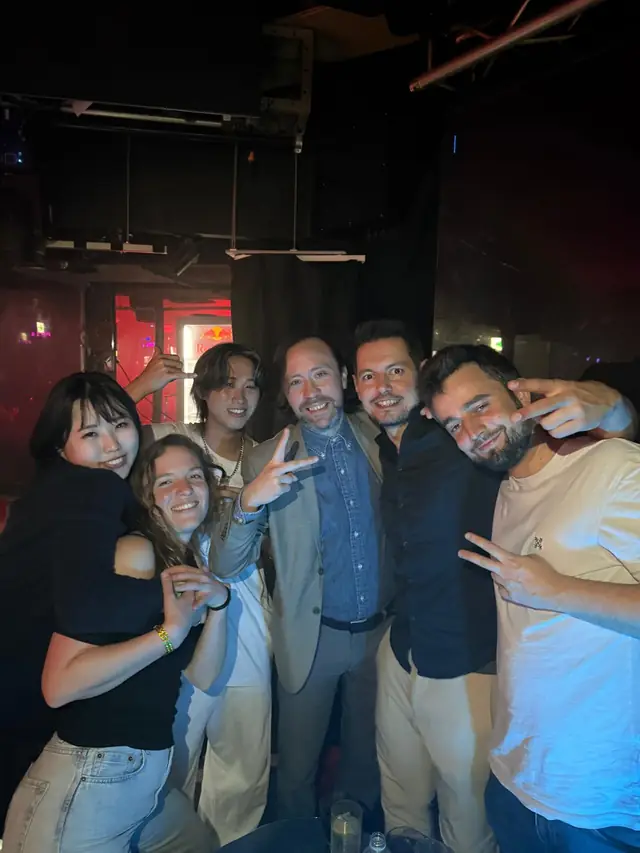
Tattoos: check before you arrive
There is no single rule for all Tokyo nightlife. The comparison above shows that clubs use different wording, from possible refusal to explicit prohibitions. If tattoos are not mentioned on a page, that is not confirmation that they are accepted.
If you have tattoos, bring a layer that can cover them and ask about the specific venue before heading out. Do not assume that a guest list or VIP booking removes this condition. A quick check beforehand is much easier than changing the plan at the door.
Bring the original ID and travel light
Bring a valid, original photo ID accepted by the venue. Do not rely on a photo on your phone or a photocopy: ZEROTOKYO explicitly refuses both. For overseas visitors, a passport is a useful option; keep it secure.
Japan’s drinking age is 20. Entry ages can differ by venue and event; my private nightlife experiences are for guests aged 20 and over. A small bag is also easier to manage than a sightseeing backpack in compact bars and crowded clubs.
One useful layer for the season
In summer, choose breathable fabrics and give yourself time to freshen up after sightseeing. In winter, a coat over a lighter outfit works better when you move between warm rooms and cold streets. A light jacket is useful in spring and autumn; on rainy evenings, prioritise shoes with a good grip.
Let’s prepare a night that suits you
Tell me your date, group size, preferred music and the kind of evening you have in mind. I can help choose the places and check what to wear, including footwear, tattoos and possible VIP arrangements. A good plan leaves you free to enjoy the company and the music.
Discover my Tokyo VIP Private Nightlife Tour with a Local Insider, or send me your plans first. We confirm the options and availability together; any VIP arrangements and their costs are discussed separately.