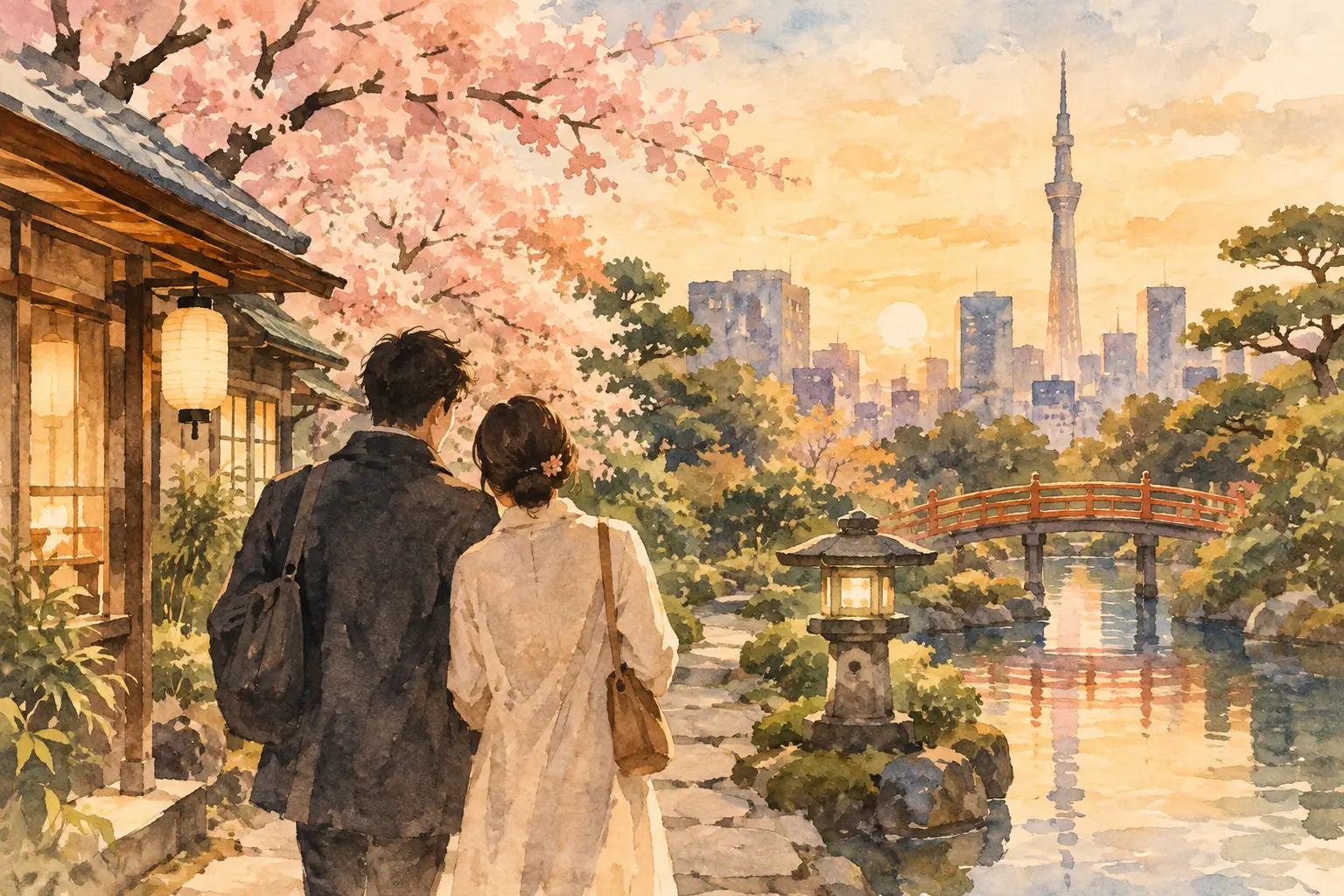
Tokyo works beautifully for two people, but only when you resist the urge to treat it like a scavenger hunt. A good Tokyo itinerary for couples leaves room for the small pleasures: a coffee after a shrine visit, a slow detour through a side street, a dinner you can actually enjoy rather than squeeze in before the last train.
The city is enormous, and the classic mistake is trying to cover its famous districts in one long day. Instead, pair neighborhoods that make sense geographically and emotionally. One day can be old Tokyo and riverside walking; another can be architecture, shopping, and Shibuya after dark. You will see more by planning less aggressively.
Start by Choosing Your Tokyo Pace
For a first visit, three full days is enough to feel the contrasts that make Tokyo memorable. Four or five days gives you more breathing room, especially if you like museums, shopping, long meals, or a quieter start in the morning.
Couples often enjoy a route built around one anchor experience per day, rather than five major sights. That anchor might be Senso-ji Temple, a gallery or garden, an evening reservation, or simply a neighborhood you want time to wander. Everything else should support it.
Tokyo is easy to move around by train, but transfers, station size, and walking distances add up. A route that looks close on a map can still take longer than expected once you are underground in Shinjuku Station. Keep each day focused on one side of the city where possible.
A Three-Day Tokyo Itinerary for Couples
Day 1: Asakusa, Ueno, and an Old Tokyo Evening
Begin in Asakusa, before the main approach to Senso-ji Temple becomes fully crowded. The temple is famous for good reason, but the more intimate part of the morning is often found on the streets around it: small workshops, modest cafés, local snack counters, and lanes where the pace feels noticeably gentler than central Tokyo.
Give yourselves time to walk without a fixed destination after the temple. The Sumida River area can be a pleasant reset, particularly if you have just arrived in Japan and are still adjusting to the scale and noise of the city. It is not about finding a perfect view at every turn. It is about allowing Tokyo to become less abstract.
From there, Ueno is a sensible next stop by public transportation. It suits couples who like markets, casual food, museums, and a less polished everyday atmosphere. Ueno Park can work well if the weather is pleasant, though museum opening hours and your energy level should guide the plan. Trying to visit several museums in one afternoon is a fine way to see a great deal of coat-check signage and not much art.
For dinner, choose either a relaxed local meal around Ueno or return toward Asakusa for a quieter evening. This is a good night not to over-program. A simple meal, a walk, and an early finish can make the next day much better.
Day 2: Harajuku, Omotesando, and Shibuya at Night
This is the day for contemporary Tokyo, but it does not need to be all crowds and shopping bags. Start around Meiji Jingu, where the wide wooded approach offers a surprising pause near Harajuku. It is one of the clearest examples of Tokyo's ability to shift mood within a few train stops.
Afterward, Harajuku can be fun in small doses. Takeshita Street is lively, youthful, and busy, particularly on weekends. Go if the atmosphere interests you, but do not feel obligated to linger. Couples who prefer design, architecture, fashion, and a calmer pace may enjoy moving on to Omotesando sooner.
Omotesando is easy to appreciate even without a serious shopping agenda. Look up at the buildings, take a break in a café, and wander the side streets rather than only following the main avenue. This is where a flexible itinerary matters. One couple may want independent boutiques; another may be happier sitting over dessert and people-watching.
Finish in Shibuya, ideally after daylight begins to fade. The crossing is worth seeing, but Shibuya offers more than its busiest intersection. Explore the smaller streets, decide what kind of dinner fits your mood, and leave room for an evening drink if you want one. A tiny bar may be ideal for a quiet date, while a cocktail lounge makes more sense if you want the night to feel a little more dressed up.
Day 3: The Imperial Palace Area, Ginza, and Shinjuku After Dark
For a change of rhythm, begin near the Imperial Palace area. The broad spaces, moats, and tree-lined paths feel distinct from the tighter streets of Asakusa or Shibuya. Access and opening arrangements can vary by area, so it is wise to check current information before building the whole day around a specific visit.
From there, Ginza is close enough to combine naturally. It is not only for luxury shopping. It can be a good place for carefully made sweets, department-store food halls, stationery, design, and a more polished version of Tokyo street life. If high-end stores are not your thing, a short walk and lunch are plenty.
Save Shinjuku for the evening. By night, it is bright, energetic, and full of choices, which is exactly why it helps to arrive with a rough idea of what you want. Some couples want an izakaya, a casual Japanese pub where you order small dishes with drinks. Others prefer a serious cocktail bar, live music, or simply a good dinner followed by a walk through the lights.
Kabukicho is part of Shinjuku's nightlife landscape, but it is not compulsory and it is not one single experience. It can be interesting to walk through with clear expectations and sensible choices. For a more intimate bar-hopping style of evening, Golden Gai may suit a small group, though its tiny venues and crowded lanes are not ideal for everyone.
Make Room for the Things You Actually Like
The best Tokyo itinerary for couples should reflect the kind of time you enjoy together. If food is the priority, build days around a few meal neighborhoods rather than racing to landmark restaurants across town. If you love photography, allow an unplanned hour in quiet backstreets. If you are celebrating, arrange your special dinner or nightlife plans early, especially on a weekend.
It also helps to be honest about your travel style. Early risers can enjoy temples and popular streets before the busiest hours. Night owls may prefer a later start and a more considered evening. There is no prize for seeing a shrine at 8 a.m. if both of you are functioning on airport coffee and two hours of sleep.
Weather changes the equation, too. Rainy days are well suited to museums, department-store food floors, shopping districts, and long lunches. On clear days, prioritize walking neighborhoods, parks, and outdoor views. A good plan has alternatives rather than a heroic commitment to walking for six hours in heavy rain.
Practical Details That Keep the Romance Intact
Reserve the things that truly matter, then keep the rest light. Popular restaurants, a special cocktail bar, and certain attractions may need advance planning. For everyday meals, flexibility is useful because a place with a short line at 6 p.m. may have a long one at 7:30 p.m.
Use public transportation, but do not underestimate the value of a taxi at the end of a long dinner or when rain arrives. Check the last train if you plan a late night, and keep your hotel address saved in Japanese as well as English. Tokyo is safe and navigable, but tired travelers make poorer navigation decisions than rested ones.
Finally, do not schedule every meal as an event. Some of the nicest moments happen at a neighborhood counter, a basement noodle shop, or a dessert stop you noticed while walking. The city rewards attention more than speed.
If you would like help shaping a day around your shared interests, Japan BTO can discuss a private Tokyo route that balances famous places with the neighborhoods and pauses that make the day feel like yours.