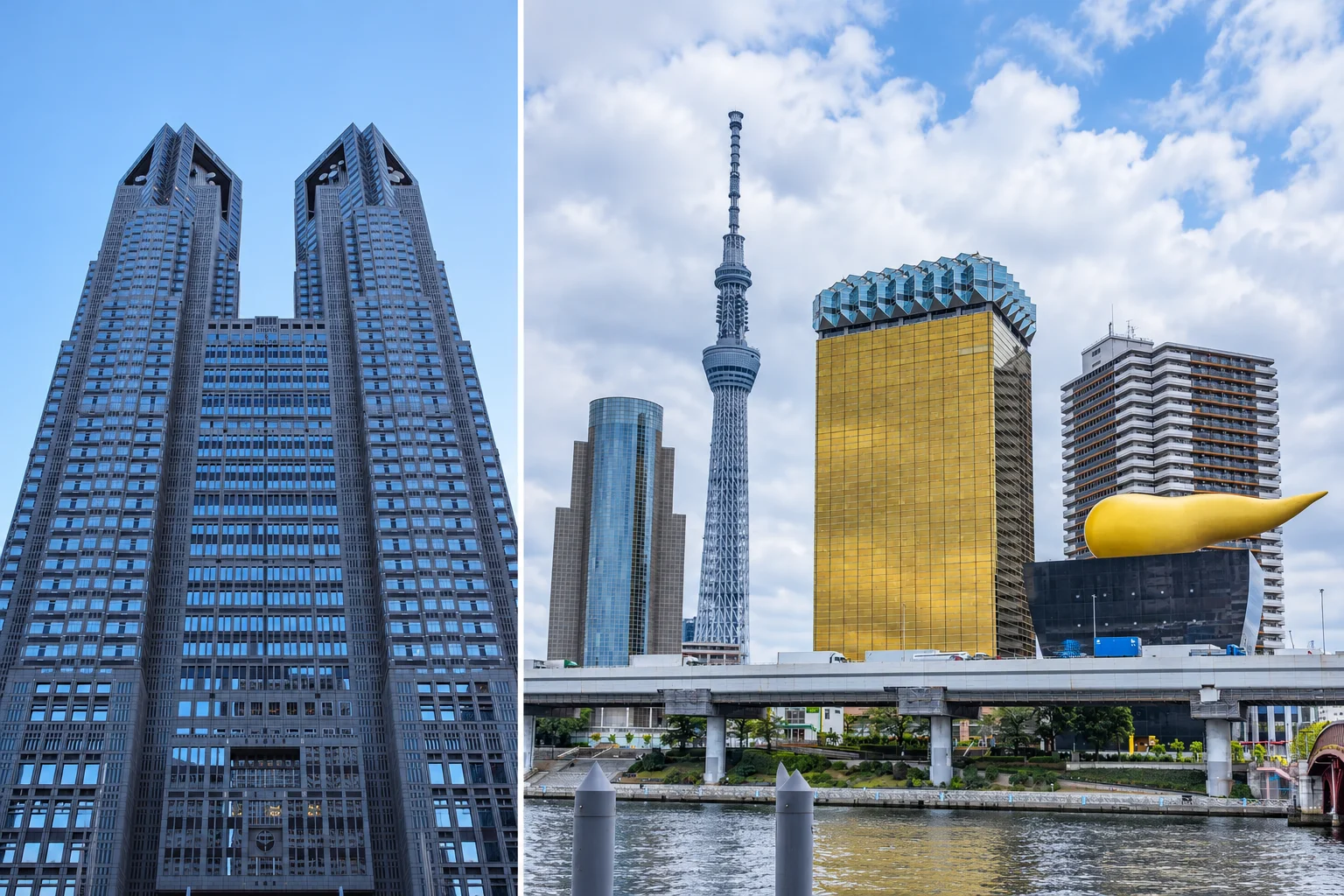

Tokyo observation decks can look interchangeable on a map: go up high, take a photo, admire a very large city. In practice, each one gives you a different version of Tokyo. One is about dramatic sunsets over Shibuya. Another puts you close to the city’s older eastern neighborhoods. One is an easy, budget-friendly pause between sightseeing stops; another deserves to be the main event of an evening.
The right choice depends less on which tower is tallest and more on where you will be beforehand, how much time you have, and whether you want a landmark in your photo or a broad sense of Tokyo’s scale. Here is how to choose without spending half your day going up and down elevators.
Renaud’s take
Popularity does not always mean good value. In my view, many of Tokyo’s most promoted viewpoints are overrated, Shibuya Sky included, once you weigh the price, time and constraints. It can still be enjoyable if an open-air rooftop is exactly what you want. I would also consider the Metropolitan Government Building, Skytree for a sweeping panorama, or a skyline stop around Asahi, depending on the day’s route.
Tokyo Observation Decks at a Glance
For a classic, elevated panorama, Tokyo Skytree is the obvious eastern-side choice. It rises above the Sumida area near Asakusa, and its height makes the city feel almost endless. Tokyo Tower, farther south, offers a more familiar, postcard-style experience and the pleasure of seeing Tokyo Skytree in the distance. If you care about having one of Tokyo’s symbols in the view, that matters.
Shibuya Sky is chiefly a choice for its open-air rooftop atmosphere. It fits a day around Shibuya, Harajuku or Omotesando, but I would weigh the admission cost and fixed entry time against how much that rooftop experience matters to you. Sunset appeal alone does not make it the best choice for every itinerary.
The Tokyo Metropolitan Government Building in Shinjuku is the practical alternative. Its observation areas are a useful option when you are already exploring western Tokyo and would rather save your budget for lunch, a museum, or a good drink later. The view is not the same kind of polished rooftop experience, but the location is convenient and the scale of Shinjuku below is impressive.
Tokyo City View in Roppongi offers another strong central perspective, with a more indoor, curated feel than Shibuya Sky. It can work well alongside Roppongi’s museums, architecture, and evening restaurants. Check current access arrangements before making a plan, since observation facilities, ticket systems, and opening schedules can change.
Choose by the View You Actually Want
For Tokyo’s full scale: Tokyo Skytree
Tokyo Skytree suits travelers who want a broad sense of the metropolis and are happy to pay for the height and panorama; check Skytree’s official visitor and ticket information before choosing. From this side of town, you can connect the visit naturally with Asakusa’s temple streets, the Sumida River, or a food stop in an older neighborhood. It is particularly good for first-time visitors who want that moment of realizing just how far Tokyo extends.
The trade-off is distance. If your day is centered on Shibuya and Shinjuku, crossing the city solely for Skytree can make the route feel fragmented. It is better when the eastern half of Tokyo is already part of the plan.
On clear days, visibility is the star. On hazy or rainy days, the experience is still interesting, but you will see more layers of buildings than distant landmarks. If the forecast is uncertain, do not make a complicated itinerary depend on a perfect skyline.
For a recognizable Tokyo postcard: Tokyo Tower
Tokyo Tower has a warmer, more nostalgic personality than Skytree. Its red-and-white structure is a landmark in its own right, and the surrounding cityscape has a distinctly central Tokyo feel. It works nicely with nearby neighborhoods such as Roppongi or the Imperial Palace area, depending on the pace and route you have planned.
Its height is more modest, which is either a feature or a limitation. You are closer to the buildings below and less removed from the city. Travelers who dislike extreme heights may find that more comfortable. Those seeking the biggest possible panorama may prefer Skytree.
A small but important point: choosing Tokyo Tower means your photos can include Skytree, while choosing Skytree means Tokyo Tower becomes one feature among many far away. Neither is better. It simply depends which silhouette you want in your Tokyo memory.
For an open-air rooftop, if it fits your priorities: Shibuya Sky
Shibuya Sky can be enjoyable if being outside above the city is a priority. Below, Shibuya is all crossings, rail lines, billboards, and people moving with purpose. Around sunset, the light shifts across the low-rise neighborhoods toward the west, then the city begins to switch on one window at a time. For me, that atmosphere needs to justify the cost and time set aside.
Entry is paid and tied to a time slot: consult the official ticket conditions. The visitor FAQ explains that weather can close the rooftop. If sunset is your priority, keep the afternoon nearby and be comfortable with the possibility that the outdoor part will be unavailable.
If your main aim is simply a good view of Tokyo, I would compare the alternatives before booking. If the rooftop itself is the attraction, Shibuya Sky may earn its place in your day. Families should also consider whether waiting for a specific entry time fits the pace of younger travelers.
For a sensible stop in Shinjuku: Tokyo Metropolitan Government Building
The Tokyo Metropolitan Government Building offers free admission to observatories at 202 meters, making it a strong option in Shinjuku. There can still be queues, so allow time and check the current visitor information. Pair it with the quieter side of Shinjuku, an afternoon in a garden or museum, or a walk that ends among the neighborhood’s bright evening streets.
It is also useful when your group has different priorities. One person may love a high viewpoint; another may be happier saving money and time for shopping or food. This is a good compromise, especially on a first day when getting oriented matters more than checking off every major attraction.
The experience is generally more functional than theatrical. That is not a criticism. Tokyo has enough theater at street level.
For the riverside skyline and a drink: Asahi
Along the Sumida River, look for Skytree, Asahi’s beer-glass headquarters and the adjacent Asahi Hall’s golden flame. The headquarters’ upper-floor restaurants offer views with a meal or drink. These are customer venues, not a free public observatory; check access and opening hours with the venue.
Timing Matters More Than Most People Expect
The most popular time is sunset, and for obvious reasons. You get daylight, the blue-hour transition, and night views in one visit. You also get larger crowds, tighter entry timing, and less flexibility if transport runs late or a previous stop takes longer than expected.
Morning or early afternoon can be the smarter choice for travelers who prefer calm. Light is often clearer earlier in the day, and you can use the deck as an orientation point before walking through a neighborhood. Night is excellent for the density of Tokyo’s lights, although reflections can be an issue at indoor viewing areas.
If you are planning photos, consider what you want to capture. Shibuya works beautifully when streets and trains are visibly active. Skytree is often strongest in clear daylight. Tokyo Tower feels especially atmospheric as evening approaches. A cloudy day does not ruin every deck, but it may change which one is worth prioritizing.
How to Fit a Deck Into a Realistic Tokyo Day
The common mistake is treating an observation deck as a quick detour. Elevators are quick. Reaching the building, navigating entrances, security procedures, ticket collection, waiting, and getting back down are not always quick. Allow more time than the elevator ride suggests, especially at popular hours.
A good route keeps the viewpoint close to the day’s other stops. Asakusa, the Asahi riverside skyline and Skytree belong naturally together; choose the stops that interest you. Shibuya Sky fits after Harajuku or Omotesando. A Shinjuku observation stop makes sense alongside Shinjuku’s parks, department stores, food halls, or evening streets. Tokyo Tower or Roppongi can suit a central route built around architecture, museums, and dinner.
Trying to visit two major decks in one day is rarely necessary. The views may differ, but your memory can begin to blur into glass, elevators, and tiny cars below. Choose one deck, then give the rest of the day to the streets, food, temples, shops, or neighborhoods that look very different from above.
For travelers with limited mobility, strollers, or a strong dislike of crowds, check each facility’s current access information and rules before committing. Observation decks are often manageable, but the surrounding stations and the walking route to the entrance may be the more complicated part.
Tickets, Weather, and Small Practical Details
Check current ticket options, timed-entry requirements, baggage rules, and operating hours directly before you go. These details change more often than travelers expect, particularly around holidays, maintenance periods, and poor weather. For outdoor rooftops, have a backup plan nearby: a department store, café, museum, or simply time to explore the neighborhood at ground level.
Bring a light layer for elevated outdoor spaces, even when the streets feel warm. Wind has a way of making visitors rethink a confident T-shirt decision. For photos, clean your phone lens before you go, and avoid pressing it against indoor glass if reflections are bothering you.
Most of all, choose the deck for the day you want, not for an abstract ranking. Tokyo’s skyline is impressive from almost anywhere high up. The better question is whether the stop helps your day flow naturally.
If you would like to include a skyline stop in a private Tokyo day that also leaves room for quiet temple streets, local food, and a comfortable pace, Japan BTO can help shape a route around what you genuinely want to see.