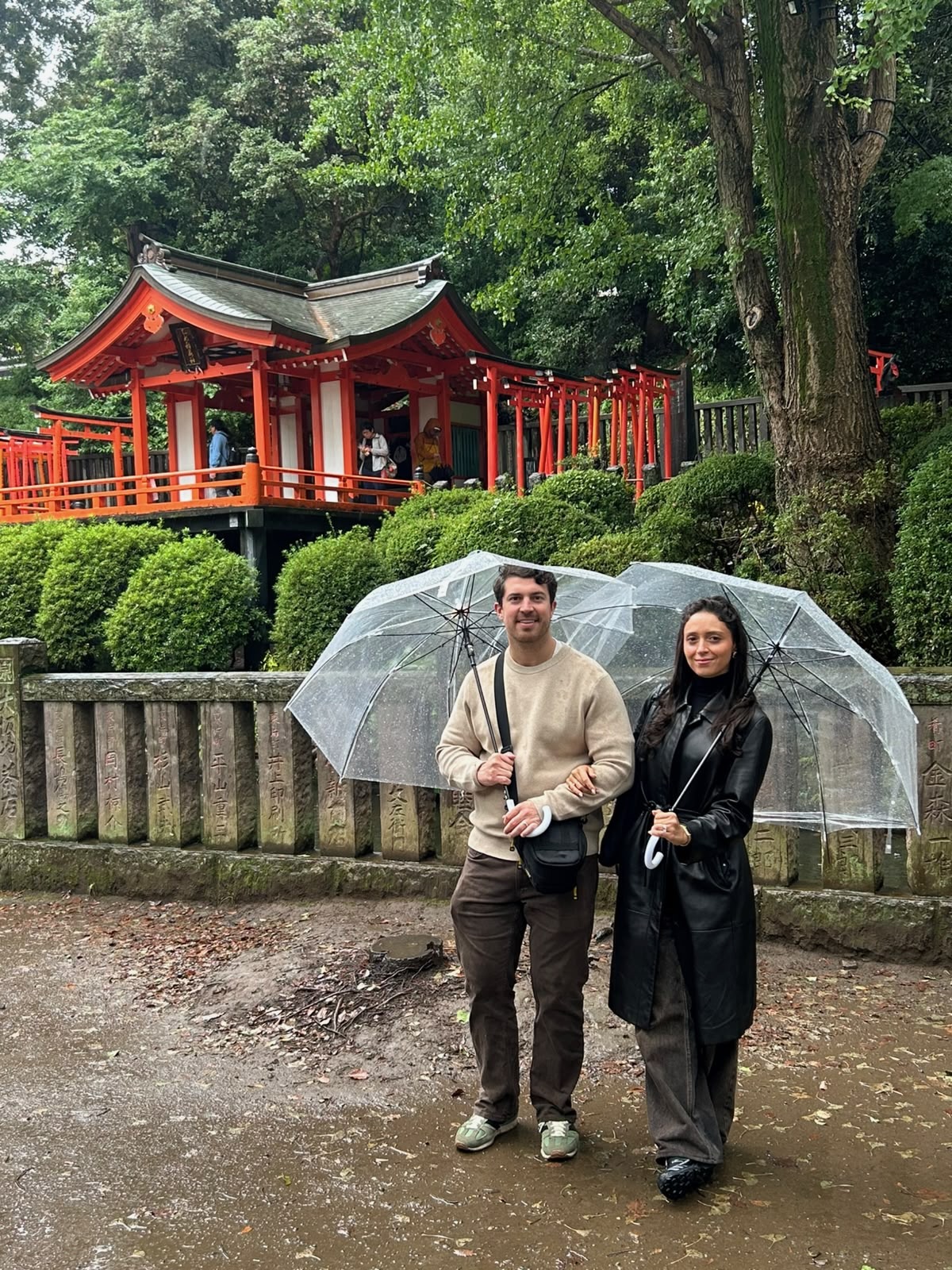
A sudden downpour at Senso-ji can turn the temple gate into a small parade of clear umbrellas, while the lanes nearby smell faintly of wet incense and grilled snacks. Rain changes Tokyo, but it does not cancel it. The best rainy-day plan is usually a few sensible swaps: shorter walks, covered shopping streets and indoor stops you actually want to visit, rather than trying to rescue every item on a long checklist.
Tokyo is exceptionally workable in wet weather. Trains are frequent, major stations connect to underground passages, and many neighborhoods have enough cafés, food halls, galleries, shops, and covered arcades to fill a satisfying day. The trick is to reduce outdoor transitions, protect your energy, and accept that a rain-day route should be a little less ambitious.
The fox’s tip: change the route, keep the fun
When it rains, I would rather adapt the day than spend it racing from one shelter to the next. Pick one area, mix short walks with proper indoor stops, and leave room for a relaxed meal. Here are a few concrete ways I would do it:
- Asakusa in light rain: enjoy a shorter visit to Sensō-ji, then explore the covered Shin-Nakamise and Kannon-dori shopping arcades. You still get the neighborhood atmosphere, with shops, something to eat and time out of the rain. Keep your umbrella handy: the temple grounds and the main Nakamise approach are not fully covered.
- Tokyo Station when the rain settles in: make an afternoon of First Avenue Tokyo Station, with Tokyo Character Street for character shops and Tokyo Ramen Street for a meal, or browse the Yaechika underground shopping mall on the Yaesu side. These are options, not a checklist: choose what interests you and check the station map so you do not accidentally head through the train ticket gates.
- An indoor afternoon that fits your interests: Tokyo Solamachi by Tokyo Skytree works well for shops and food; Sunshine City in Ikebukuro offers shopping, restaurants and indoor attractions. Sunshine City has an underground approach from Higashi-Ikebukuro Station. Choose one complex near your route, and check opening hours and any separate attraction tickets.
My priority is still for you to have a great time in Tokyo. With a little flexibility, an umbrella and well-chosen breaks, an ordinary rainy day can be a lovely part of the trip. We adapt to the weather and to your group, rather than forcing the original route.
Start by judging the kind of rain
A light, steady shower is often no reason to abandon an outdoor neighborhood. Historic areas such as Asakusa remain enjoyable when you can walk slowly, pause under eaves, and use indoor stops as natural breaks. A shrine or temple visit may still work well, although stone paths can be slippery and open courtyards offer little shelter.
Heavy rain, strong wind, or a forecast that stays wet all afternoon calls for a different approach. Rather than crossing the city repeatedly to preserve an original plan, choose one or two connected areas and spend more time in each. A good rainy day in Tokyo can be wonderfully unhurried. A bad one is usually created by trying to visit Asakusa, Shibuya, Harajuku, Akihabara, and Shinjuku before dinner while everyone is damp and checking train maps.
During severe-weather warnings or a typhoon, check official advice, transport updates and venue closures before setting out; an indoor destination does not make the journey there safe.
It also depends on your group. Families with young children may prefer shorter walks and predictable restroom stops. Travelers who enjoy architecture, design, shopping, or food can make excellent use of central stations and department-store areas. If you came mainly for gardens, broad city views, or long walks through quiet residential streets, move those plans to the clearest day of your stay if your schedule allows.
Build a rainy-day route around shelter
The best adjustment is not to spend the day entirely indoors. Tokyo is still worth seeing between stops. Instead, create a route with short outdoor sections and worthwhile places to step inside.
Choose neighborhoods with natural cover
Ueno works well when museums are part of your interests, with a park walk only when the weather softens. The park itself can feel exposed in hard rain, so treat it as a brief transition rather than the main event. Nearby streets, casual restaurants, and market lanes give the area more flexibility than a museum-only plan.
Asakusa is a good choice for travelers who want a traditional Tokyo atmosphere without committing to a full day outside. The covered Shin-Nakamise and Kannon-dori shopping arcades offer sheltered alternatives nearby, with shops and food stops. Nakamise, the main approach to Senso-ji, and the temple courtyards are not fully sheltered. Just do not expect every lane or temple space to be dry. The pleasure is in alternating between a few wet streets and dry pauses.
Shibuya, Harajuku, and Omotesando can suit a rainier afternoon if your interests lean toward contemporary Tokyo, fashion, architecture, and people-watching. Large stations, underground access, and commercial buildings make it easier to move around. Harajuku’s smaller side streets are more enjoyable in light rain than in a real storm, while Omotesando’s wide sidewalks can be uncomfortable when wind drives the rain sideways.
Akihabara is another practical option for fans of games, electronics, animation, and hobby shops. It is not a single enclosed attraction, and you will still cross streets, but its stops are compact and easy to tailor. You can browse seriously or simply take in a side of Tokyo that makes more sense once someone explains what you are looking at.
Use food as part of the plan, not an emergency shelter
A rainy day is a fine reason to linger over lunch. Tokyo has many quick meals, but rushing through a bowl of noodles just to escape the weather is not always the best use of your time. A relaxed lunch or a seated café stop can reset the day before another short walk. Department-store basement food halls, or depachika, are fun to browse, but many counters sell takeaway food and do not provide seating. Choose a café or restaurant if you need a proper rest.
This is also where local knowledge matters. Some popular places have lines that become less pleasant in the rain, and some small restaurants have very limited seating. It can be smarter to choose a good nearby option than to chase a famous address across town. If dietary needs are involved, allow more time and keep expectations realistic, especially in smaller independent places.
Make transport work for you
Tokyo’s rail system is a great ally on wet days, but stations can be large and exits are not interchangeable. The exit closest to your next stop may save ten wet minutes, while the wrong one can send you across a major intersection with a crowd and a dripping umbrella.
Leave extra time for transfers. Platforms, staircases, and station corridors are busier when people are moving more carefully. Keep a small towel or handkerchief accessible, and avoid packing a fragile paper map or ticket loosely in an outer pocket. A phone with a portable battery is more useful than usual when you are checking routes under an awning.
Taxis can be useful for a short, strategic journey, particularly if someone in your party finds wet walking difficult. They are not a magic solution during peak periods or storms, when demand rises and road traffic slows. Public transportation is often still faster across the city. Think of taxis as a practical tool for the awkward gap, not an automatic replacement for the train.
What to wear and carry without overpacking
Tokyo convenience stores and drugstores can solve a surprising number of weather problems, but bringing a few basics makes the first hour much more comfortable. A compact umbrella is useful for light rain, while a rain jacket is often better when wind picks up or when you need both hands free on busy stairs.
Shoes matter more than most visitors expect. Waterproof footwear is ideal, but the key is a sole with decent grip and enough comfort for walking. Smooth leather soles and soaked sneakers make a long afternoon feel much longer. If you are visiting temples, remember that some indoor areas may require shoes to be removed, so damp socks are not a small detail.
Avoid treating a large umbrella as a shield for a whole group. Narrow sidewalks and station entrances are crowded. Tokyo has umbrella stands outside many businesses, though you should not rely on them for valuables or assume every venue handles umbrellas in the same way. A simple plastic umbrella sleeve at an entrance helps keep floors dry and avoids leaving a trail behind you.
Tokyo in the rain after dark
Rain can make an evening in Tokyo feel more intimate rather than less appealing. Reflections from signs and lanterns brighten the pavement, and a well-paced night needs far less walking than a full day of sightseeing.
For a relaxed evening, choose one district and move between a few places rather than bouncing across town. Shinjuku has an enormous range of restaurants, bars, and cocktail lounges, but its stations and streets can be confusing in wet weather. Shibuya suits guests who want a younger, busier atmosphere, with plenty of indoor options close together. Roppongi can work for cocktails, dining, or a later night, depending on the venues and your group’s preferences.
Golden Gai is atmospheric in light rain, but its tight lanes and tiny bars are not ideal for every group size or every kind of evening. A route should fit the people in it. Some guests want a quiet drink and good conversation; others may want music, a celebration, or a livelier room. None of those choices requires standing outside in the rain for an hour.
If you are considering bars or clubs, bring photo identification and budget for your own food, drinks, transportation, and any venue charges unless you have confirmed otherwise. Entry policies, crowds, and cover charges can vary. A thoughtful plan leaves room to change direction if a place feels too loud, too crowded, or simply not like your scene.
When a private guide helps
Rain is one of the moments when a private itinerary earns its keep. The value is not pretending the weather does not exist. It is knowing which nearby stop makes sense, when to cut a walk short, how to avoid needless backtracking, and when a slower lunch is the better choice.
At Japan BTO, we can shape a private day around your interests, pace, and the conditions on the ground, subject to availability and the agreed route. A clear plan is useful, but a good Tokyo day should also have enough breathing room for the weather to have its say. Put on dry socks, take the next sensible train, and let the city show you a different side of itself.